

The 30-Second Version
- Green light: Mild to moderate cramps for a day or two. Heat, rest, and pain relief usually handle it.
- Yellow light: Pain that regularly interferes with school, sports, or sleep, or doesn’t respond to pain relievers. Book a doctor’s appointment.
- Red light: Sudden, severe pain, fever, or fainting. Get medical care right away.
- Your role: Stock the toolkit, spot the patterns, and make the call when it’s needed.
Kids famously don’t come with an owner’s manual, and this chapter is no exception.
If you’re the go-to fixer in your house, period pain can be frustrating, because it’s one of those things in life you can’t actually fix. There’s no part to replace and no DIY video to follow. The main tools in your kit are patience, a listening ear, and a well-stocked supply cabinet.
The good news? There’s more you can do than you might think. Here’s a quick look at how period cramps work, plus a toolkit for the rough days.
How It Works: The Dad Translation
During a period, the uterus, which is a muscle, contracts to shed its lining. Those contractions are driven by chemicals called prostaglandins. Think of prostaglandins as the throttle: the more of them, the stronger the contractions, and the stronger the cramps.
What It Feels Like
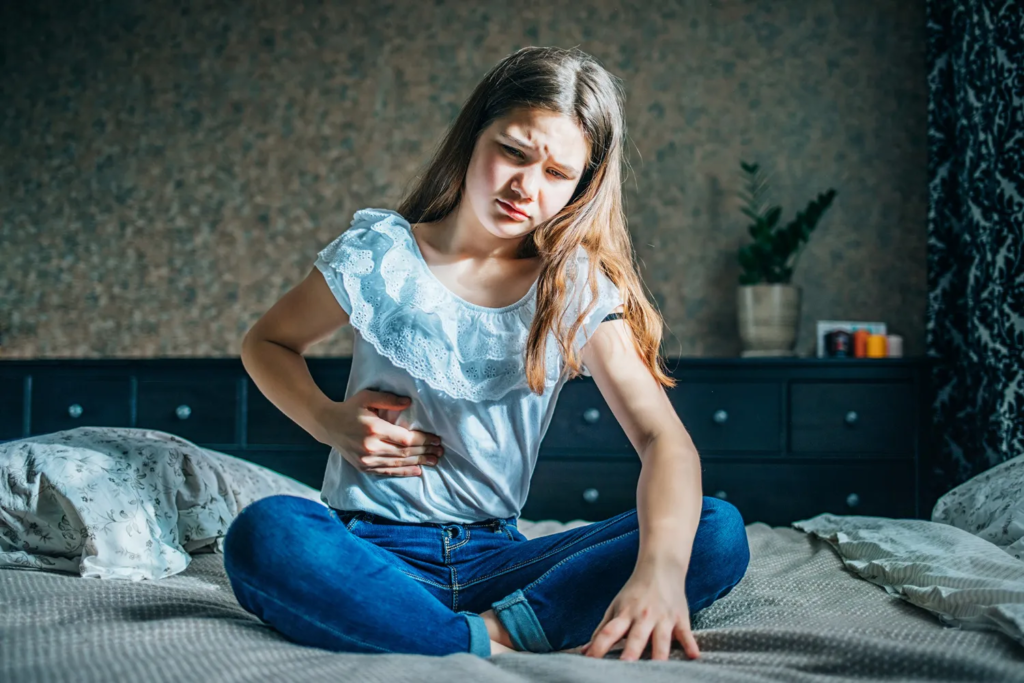
Picture the worst charley horse you’ve ever had, the 2 a.m. calf cramp that has you hopping around the bedroom. Now move it low into your belly. Instead of letting go after a minute, it tightens and eases in waves, sometimes for hours. Some girls get a mild version. Others get the full 2 a.m. special.
Green Light: Your Period Toolkit
Mild to moderate cramps before or during the first couple of days of her period are common. She might also feel more tired than usual. Here’s what’s worth knowing:
- Heat. Heat relaxes the muscle and boosts blood flow, the same reason a heat pack feels so good on a sore back after a weekend of yard work. A heating pad or microwavable heat pack is one of the simplest, most effective tools around.
- How pain relievers work. If you’re considering options like ibuprofen, it helps to know why they’re so often used for period cramps. They’re anti-inflammatories that lower prostaglandin levels, which turns the throttle down rather than only dulling the pain. Timing matters, too: they tend to work best when taken at the first sign of cramps. Her doctor can help you decide whether they’re a good fit and what’s appropriate for her age. If she needs them every month just to get through, or they barely help, that’s a good reason to check in with her doctor or a pelvic health PT.
- Regular movement. Regular exercise throughout the month, not just during her period, may help ease cramps over time. If she’s already into sports, dance, or anything that gets her moving, that’s a bonus. During her period, gentle movement is great if it feels good, and rest is fine if it doesn’t.
- A TENS unit. This small, battery-powered device sends gentle electrical pulses through pads on the skin, and research suggests it may help ease period cramps for some people. Finally, a period solution that comes with batteries. Ask her doctor or a pelvic health PT whether it’s a good fit for her.
- Tracking the pattern. A period-tracking app can help her note when the pain starts, how bad it gets, and what helps, while keeping the details private. If her pain ever moves into yellow-light territory, that information will be gold for her doctor.
Yellow Light: Book an Appointment
Book an appointment with her doctor if her pain regularly:
- Keeps her home from school or out of sports
- Doesn’t improve much with pain relievers
- Comes with vomiting or feeling faint
- Seems to be getting worse over time
Also book one if she’s soaking through a pad or tampon every hour or two for several hours in a row, or if her period lasts longer than about seven days. Conditions like endometriosis can begin in the teen years, so getting checked early can help her find relief sooner.
Many doctors spend part of the visit with teens one-on-one, which gives her room to ask her own questions.
Red Light: Get Care Right Away
Sudden, severe pain, especially with fever, fainting, or pain that feels very different from her usual cramps, needs medical care right away.
How a Pelvic Health PT Can Help
Period pain doesn’t always come from the uterus alone. Tight pelvic floor muscles, constipation, and hip or back pain can all add to it. A pelvic health physical therapist works alongside her doctor to find those contributors and give her practical tools she can use at home.
The Bottom Line
You can’t fix period pain. But you can stock the toolkit, know which light you’re looking at, and make the call when it counts.
At Floored Pelvic Health, I help teens and women with pelvic pain, period-related symptoms, bladder and bowel issues, tampon discomfort, and pelvic floor tension, with calm, private care built around comfort and trust.
If your daughter’s period pain is getting in the way of school, sports, or sleep, book an appointment. Together, we can figure out what may be contributing and build a plan that helps.