

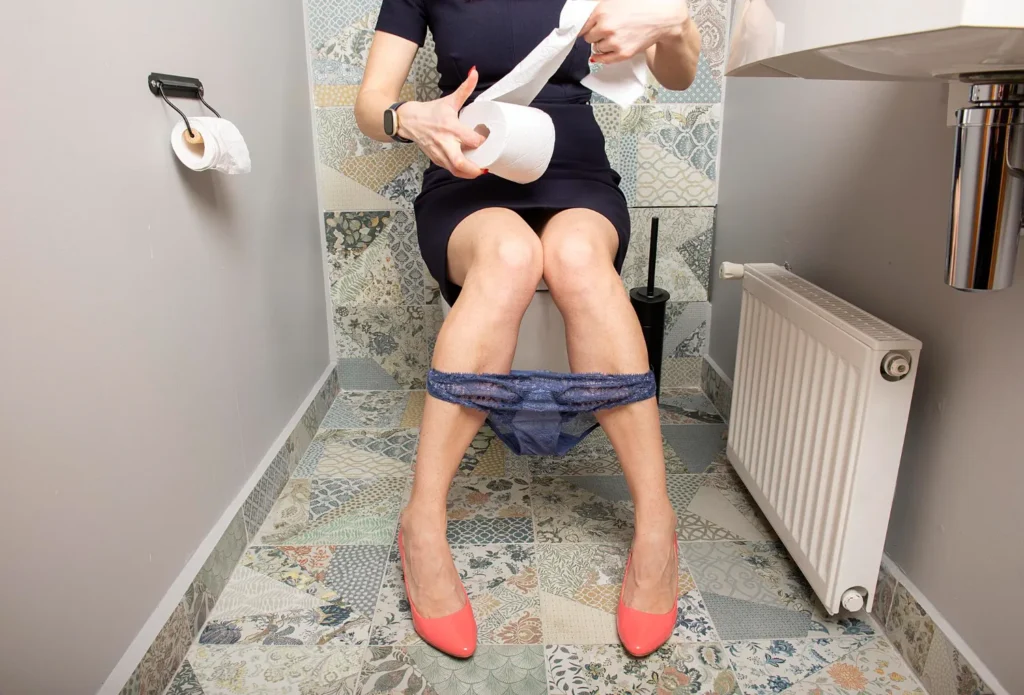
You know the feeling.
You leave the house and immediately wonder if you should have gone one more time. You walk into a store and quietly clock where the bathroom is. You avoid long drives unless you know there will be a place to stop. You sit through a meeting, a movie, or a dinner trying to decide if you can wait.
It is frustrating. It is distracting. And after a while, it can start to feel normal.
In my work with women, I hear this often: “I can manage it, but I am always thinking about it.”
That is the part I pay attention to.
If your bladder is shaping how you travel, exercise, work, sleep, or move through your day, it is worth looking at. Not because something is wrong with you, but because your body may have learned a pattern that can often be retrained.
When your bladder starts running the day
Bladder urgency is that sudden, hard-to-ignore feeling that you need to pee right now. Frequency is when you are going more often than feels normal for your body.
For some women, it shows up as rushing to the bathroom. For others, it is peeing “just in case” all day long, waking up at night, leaking on the way to the bathroom, or avoiding activities because a bathroom may not be close.
This can happen after birth, during perimenopause, with stress, with pelvic floor tension, or after years of habits that slowly taught the bladder to signal too early.
The good news is that your bladder can learn new patterns.
And you do not have to keep arranging your life around the nearest bathroom.
Why “just in case” peeing can backfire
Peeing before a long car ride or before a meeting is not the problem.
The problem is when “just in case” becomes the rule for your whole day.
Your bladder is meant to fill, stretch, and send signals as it gets closer to full. If you empty it every time there is a small urge, your bladder may start treating that smaller amount like an emergency.
What feels like control in the moment can slowly train your body to ask for the bathroom more often.
That does not mean you did anything wrong. Most women start doing this because they are trying to avoid leaking, discomfort, or embarrassment.
But if your bladder is signaling too early, it may need retraining, not more fear.
Why drinking less water may make urgency worse
A lot of women drink less water because they want to pee less.
I understand why. It sounds logical.
But for many women, cutting back too much can make urine more concentrated, which can irritate the bladder and make urgency feel stronger.
Your bladder usually does better with steady, realistic hydration instead of long stretches of restriction followed by catching up later.
Coffee, carbonation, citrus, alcohol, and some sweeteners can also bother the bladder for some women. That does not mean you can never have them. It means it is worth noticing whether your symptoms change when your habits change.
Why urgency is not only a bladder problem
Your bladder does not work alone.
It responds to your pelvic floor, breath, core, bowel habits, stress, and nervous system.
If your pelvic floor is gripping or not relaxing well, your bladder may feel more urgent. If you are constipated, the extra pressure can irritate the bladder. If you are stressed, your nervous system may keep your whole body on alert, including your bladder.
That is why a generic Kegel sheet is not enough.
Sometimes urgency improves with strength. Sometimes it improves when the pelvic floor learns to relax. Sometimes we need to work on bladder retraining, pressure management, bowel habits, breathing, or daily routines.
The plan depends on what your body is doing.
What I look at when urgency takes over
When I work with women who are dealing with urgency or frequency, I want to understand the full pattern.
That may include:
- How often you pee during the day
- Whether you wake up at night
- When urgency shows up
- What you drink and when
- Whether you leak on the way to the bathroom
- Whether constipation is adding pressure
- Whether your pelvic floor is tight, weak, or poorly coordinated
- How stress, movement, and daily habits affect your symptoms
This is where things often start to feel less mysterious.
Your bladder may have learned a pattern. With the right plan, it can often learn a better one.
You do not have to keep mapping bathrooms
If your day is shaped by where the bathrooms are, that matters.
If you are skipping road trips, workouts, events, flights, errands, or long walks because you do not trust your bladder, it is worth talking about.
At Floored Pelvic Health, I help women understand bladder urgency, frequency, leaking, pelvic floor tension, and bathroom habits with one-on-one care built around your real life.
If your bladder is running more of your day than you want it to, book an appointment. I can help you understand what may be contributing to your urgency and build a realistic plan to help you feel more confident again.