

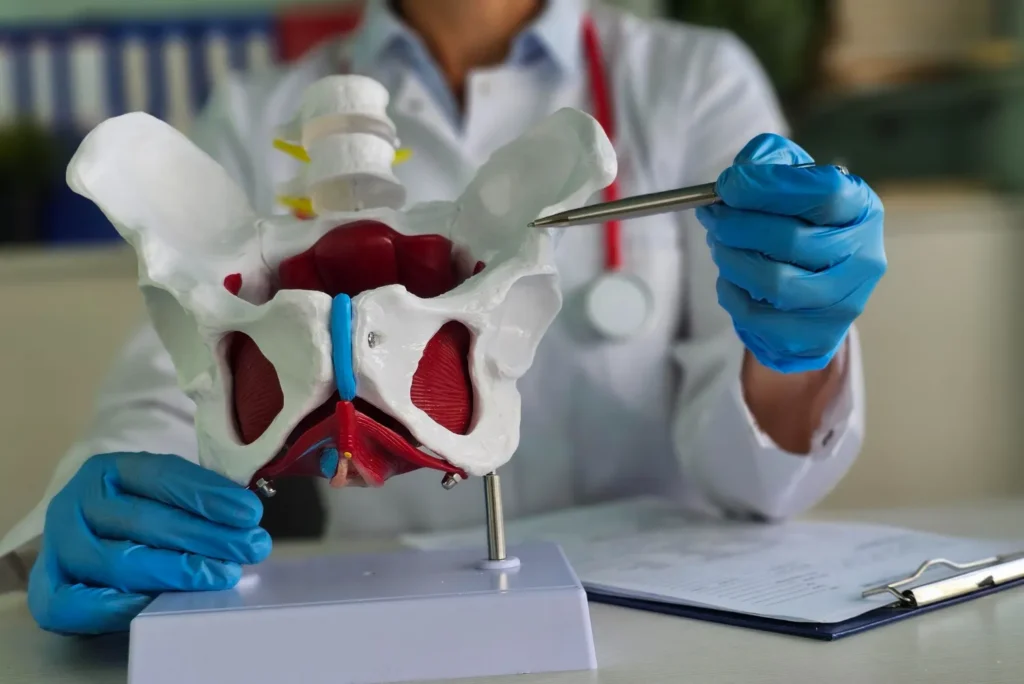
Pelvic wands are becoming easier to find, but most women are not given much guidance beyond: “Use this at home.”
That is not enough.
In my work with women, I hear questions like:
“Am I supposed to press on the painful spot?”
“How long should I use it?”
“Is soreness afterward normal?”
“What if it makes things worse?”
These are the right questions.
A pelvic wand can be helpful, but it is not something I want women using randomly or forcefully. It is a tool for a specific reason, and it works best when you know what your body actually needs.
What a pelvic wand is actually for
A pelvic wand is most often used to help release overactive or tender pelvic floor muscles.
It is not a strengthening tool.
It is not a Kegel tool.
It is not meant to tighten the pelvic floor.
It is not something every woman with pelvic symptoms needs.
Most of the time, we are using it for downtraining, which means helping muscles relax, soften, and respond better.
That matters because not every pelvic floor symptom comes from weakness. Some symptoms come from muscles that are gripping, guarding, or having a hard time letting go.
When pelvic floor tension may be part of the problem
A pelvic wand may be helpful when symptoms are connected to pelvic floor tension or trigger points.
Women often describe this as:
- Pain with insertion
- Pain with sex
- A deep ache in the pelvis
- Tailbone, hip, or sit bone pain
- A feeling of tightness or guarding
- Pain that feels like one specific “spot”
- Bladder urgency that flares with tension
- Constipation that feels tied to trouble relaxing
The key word is “may.”
A wand can help some women reach deeper pelvic floor muscles that are hard to access externally. But the symptom alone does not tell us the whole story.
Pain, urgency, and tightness can come from several different causes. That is why the wand should match the plan, not replace the assessment.
When a pelvic wand is not the right starting point
This is the part many product pages do not explain clearly.
A pelvic wand may not be appropriate if you have an active infection, unexplained bleeding, new or worsening pelvic pain, recent surgery without clearance, open wounds, or symptoms you do not understand yet.
You should also stop or pause if the wand makes pain sharper, increases burning, worsens urgency, causes lingering soreness, or leaves your body feeling more guarded afterward.
More pressure is not better.
Longer is not better.
Pushing through pain is not the goal.
If your body is bracing against the tool, that is information. It may mean you need a different approach first.
How to use a pelvic wand without forcing it
When a pelvic wand is the right tool, the goal is not to dig into pain.
The goal is to gently find areas of tension and help the muscle soften.
That means using less pressure than you think, moving slowly, breathing, and paying attention to how your body responds. If your body starts to tighten, guard, or pull away from the sensation, pause.
A helpful session should leave you feeling calmer, easier, or less guarded.
If you feel more irritated afterward, your body may be telling you the wand is too much, too soon, or not the right tool for the problem.
Why guessing can keep you stuck
The biggest mistake I see is using a pelvic wand as a guess.
If sex hurts, a woman may press where it hurts.
If the pelvic floor feels tight, she may try to force it to release.
If urgency flares, she may assume deeper pressure will calm it down.
But pelvic floor symptoms are rarely that simple.
Pain may be connected to muscle tension, scar tissue, nerve sensitivity, dryness, bladder irritation, constipation, hip mechanics, stress, or several things at the same time.
The wand is a tool. It is not the diagnosis.
The safest way to start
The safest time to use a pelvic wand is after you know why you are using it.
In a pelvic floor evaluation, we can look at whether your symptoms are coming from tension, weakness, coordination issues, scar tissue, tissue sensitivity, bladder habits, bowel habits, or something else.
If a wand makes sense, I can show you how to use it safely at home, where to focus, how much pressure to use, how long to spend, and what signs mean you should stop.
That kind of guidance matters because the goal is not just to use the tool.
The goal is to help your body feel better.
A pelvic wand should support your body, not irritate it
A pelvic wand can be helpful for the right person, at the right time, for the right reason.
It may support pelvic floor release, reduce tension, and help with symptoms connected to overactive muscles. But it is not right for every symptom, and it should not hurt.
At Floored Pelvic Health, I help women understand whether tools like a pelvic wand actually make sense for their body. Your care may include pelvic floor assessment, breath work, mobility, scar tissue support, relaxation training, strengthening when appropriate, and clear guidance for what to do at home.
If you are wondering whether a pelvic wand could help, book an appointment. I can help you understand whether it is the right tool for your body and how to use it safely at home.