

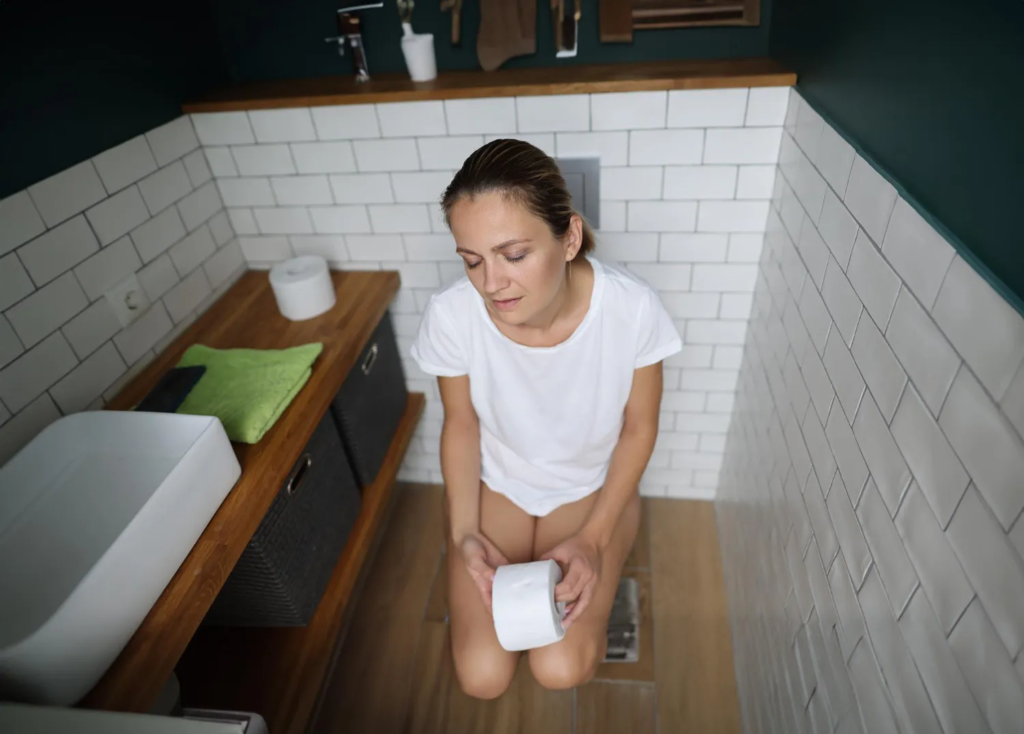
It’s 1:40 a.m. You’re awake, and you’re not sure if the bladder woke you or you woke the bladder. Either way, you’ve got to pee. Hopefully the toilet seat is down.
Back in bed. Then 3:20. You know the exact creak of the third floorboard, you’ve mastered walking to the bathroom with your eyes closed, and you’ve started doing math about how many hours of sleep you can still salvage.
You’ve cut water after 7 p.m. You’ve tried “just ignore it.” You’ve wondered if this is a bladder thing, a hormone thing, or a you’re-getting-older thing, and whether anyone would take it seriously.
Here’s the thing: getting up twice a night or more has a name, several causes, and a handful of fixes, and almost none of them are “drink less.”
What’s Actually Going On
Waking two or more times a night to pee is called nocturia. It has a medical name because it’s a recognized medical problem, not something you’re imagining or doing wrong. After 40, it’s common in women. Common is not the same as normal, and normal is not the same as permanent.
At night, your body is designed to let you sleep through the fill. Hormones dial down urine production overnight, the bladder wall relaxes so it can hold more, and the signal to go stays quiet until morning. In your 40s and 50s, several of those functions can change, and waking up multiple times each night can become a frustrating part of life.
Seven Reasons You’re Up at 3 a.m.
Your pelvic floor is too tight to let the bladder empty
A pelvic floor that holds tension all day doesn’t fully let go when you sit down to pee. The bladder empties most of the way and stops, leaving some urine behind. Two hours later, that leftover plus what your kidneys made overnight is enough to wake you. A bladder that never starts the night empty will always fill faster. That’s why I check for pelvic floor tension before anything else.
Perimenopause is changing the bladder and your sleep
Estrogen helps keep the bladder lining calm and the urethra well supported. As it drops, the bladder gets twitchier and smaller amounts feel urgent. Sleep also gets lighter in perimenopause, so a bladder signal that used to be ignored now wakes you. (Is it perimenopause? Possibly. Is it also a bladder you’ve been training? Also possibly.)
You’ve trained your bladder to signal before it’s full
Years of “just in case” peeing teach the bladder to send signals at smaller volumes. At night, that habit shows up as waking at 3 a.m. with a bladder that isn’t full, just loud.
Your evening glass of wine
Alcohol and caffeine both tell the kidneys to make more urine and irritate the bladder lining. Wine at dinner can show up as a 2 a.m. trip to the toilet. Decaf after 4 p.m. can lead to the same 2 a.m. trip for some bladders.
Fluid timing, not fluid amount
If most of your water happens after 6 p.m. because you forgot all day, your kidneys are processing it at midnight. The total is fine. The schedule isn’t.
Your legs are holding water during the day
If your ankles are a little puffy by evening, that fluid drains back into your bloodstream when you lie flat, and your kidneys turn it into urine. You’re not making more pee. You’re making it later.
You’re waking up for another reason and peeing because you’re awake
Sleep apnea, hot flashes, a snoring partner, or a restless child can all wake you first. Once you’re awake, you notice the bladder and head to the bathroom, even though it wasn’t the bladder that woke you. Treating the sleep problem often fixes the “bladder problem.”
Why “Just Drink Less” Isn’t the Answer
Cutting fluids all day makes urine concentrated, which irritates the bladder, making it more urgent, not less. You end up dehydrated and still up at 3 a.m. Drinking less water doesn’t always address the main cause.
The other common advice is “that’s just menopause.” Hormones are real and worth treating, but a tight pelvic floor that doesn’t fully empty and a bladder trained to signal early don’t fix themselves with estrogen alone.
What Actually Helps
- Front-load your water. Most of your fluids before 4 p.m., a modest glass with dinner, sips only after. Same total, better schedule.
- Move the wine (or skip it on weeknights). If you’re having alcohol or caffeine, earlier is better. Try a week without evening versions and see if that changes anything.
- Get your legs up before bed. Twenty minutes with calves above your heart in the early evening lets your kidneys process that fluid while you’re awake. Compression socks during the day help too.
- Empty all the way. Sit fully, feet supported, let your belly soften, exhale slowly. No hovering, no pushing. Give it an extra 30 seconds. Many women are shocked by the second wave.
- Retrain the night bladder. When you wake, pause. Slow breaths, feet still. If the urge fades, stay. If it’s a true full bladder, go. Over time, you’re teaching it to wait until it’s actually full
. - Treat the pelvic floor, not just the bladder. A tight pelvic floor that can’t relax to empty responds to release work and breath training, not Kegels. Yes, this is a situation where doing fewer Kegels is the assignment.
- Have the vaginal estrogen conversation. Low-dose vaginal estrogen is a legitimate option for an irritable perimenopausal bladder, and it pairs well with PT. Your gynecologist is the right person to ask.
When to See Your Doctor First
Check in with your doctor promptly if the nighttime peeing is new and sudden, if you have new swelling in your legs or ankles, breathlessness when lying flat, unexplained thirst or weight loss, blood in your urine, burning or pain, fever, or a partner who says you stop breathing or gasp in your sleep. These can point to heart, kidney, blood sugar, infection, or sleep apnea issues that need a medical workup before anything else. A reasonable question to ask is “Could my nocturia be coming from something other than my bladder, and should I have a sleep study or blood work?” I work alongside your doctor, not instead of them.
What to Do This Week
- Keep a two-night log. Bedtime, each wake-up, and whether you peed a lot or a little. A lot means fluid. A little means habit or tension.
- Shift fluids earlier. Set a reminder to finish your big water bottle by 4 p.m.
- Legs up for 20 minutes after dinner, every evening this week.
- Practice the full empty. Soft belly, long exhale, feet flat, extra 30 seconds. Every daytime pee is a rehearsal.
- Skip evening alcohol and caffeine for seven nights and compare the log.
Get an Actual Answer About Your Nights
An evaluation sorts out which problem you actually have: a pelvic floor that won’t relax enough to let the bladder empty, a bladder that’s been trained to signal too early, or a sleep or medical issue your doctor should look at first. Then you get a plan for the specific thing keeping you up.
Not sure whether what you’re feeling is worth a visit? Start with the free 2-minute self-check. It won’t diagnose you, but it will tell you whether your nights are a pelvic floor story or something else.
If you’ve memorized the squeaky floorboard and you’re doing sleep math at 3 a.m., let’s find out what’s actually going on. Book an appointment and get back to sleeping through the night like you used to. A pelvic floor evaluation takes one hour, one-on-one, in a private room in Redmond or virtually from wherever you live. No referral needed.
Keep reading: Peeing More in Perimenopause? Here’s What Your Pelvic Floor May Be Telling You and Vaginal Estrogen, Pelvic Floor Therapy, or Both?